Socialising your puppy is crucial for them to develop into well mannered, confident dogs and most dog owners are very aware of this. So much so, that they are desperate to get as much socialisation for their puppy as possible, but is there such a thing as too much?
How we socialise our puppies is as important as how much socialisation they get. Exposing puppies to lots of new things all at once on a regular basis can have the opposite effect to what owners were hoping for. The puppy could shutdown because they are overwhelmed or every puppy owners worst nightmare, start barking at everything and everyone!
We often forget that puppies are experiencing new things on a daily basis in their normal lives at home and on walks, without the addition of extra socialisation. Depending on the environment your puppy was bred in, depends on how much they have already heard and seen. A puppy bred in a busy family home is likely to be habituated to lots of household sounds, but those brought up in an outside barn/kennel could be surprised by simple noises made when you are cooking a meal or watching TV. This is why it is important to recognise when your puppy is unsure and give them time to think and explore without pressure. Lets introduce one new thing at a time!
The same applies to the outside world. If your puppy joined your family at 8 weeks old, it is unlikely they have seen anything of the outside world. While leaves blowing in the wind or seeing the neighbour’s cat may be fun and exciting for your puppy, things like noisy traffic or busy pedestrian areas can be scary for tiny pups. Gradual exposure is best. Choose quiet streets and the quieter times of day to take your puppy to these areas and do it sparingly ,with plenty of time to rest and recover in between. If you puppy stops or barks at something new, don’t tell them off, rush them forward or coerce them with treats. Give puppy time to watch and listen, then let them decide if they want to go forward.

When JJ was a tiny puppy I was confused when he barked at everything outside the house. I would tell him to shush and move him on. When I was having lunch outside a cafe with a friend one day and he barked at someone walking by that bent down to touch him. I picked him up and put him on my lap and my friend laughed and said I was teaching him that when he barks he gets a cuddle! I wish I had picked him up in more of theses situations not less. I wish I had done it so he could feel safe viewing the world, that he found scary, from a higher vantage point with me as his safe base. However, 9 years ago I didn’t know what I know now. I hadn’t started my journey into animal behaviour and I made mistakes with JJ which I wish I could undo. I wish I could have been more patient with him and not had such high expectations for him to live up to Jack’s (his dad) faultless behaviour.
There are lots of reasons puppies can be uncertain, but by being patient and understanding we can help them through the difficult situations and help them build confidence. I know now that JJ’s spinal condition is congenital (with him from birth) this may have contributed to his uncertainty out in the big wide world as a puppy and certainly contributes to his uncertainty in social situations as an adult dog with chronic pain caused by the condition. I tried to do all the ‘right’ things for my pup. We went to puppy classes to learn some basics and get some socialisation, but he was still worried by other dogs and people and barked a lot. The trainers suggested squirting him with water when he barked to stop him. I tried it. It worked. Until the next new thing entered his personal space. In case you are wondering, this means it didn’t work at all! It simply suppressed the behaviour temporarily, without changing any of the underlying emotions and in addition made him scared of spray bottles for life! JJ has since taught me at least as much as all the books I have read about dogs. The most important thing he has given me is huge amounts of patience!

JJ and his dad (Jack)
And so to puppy classes……
How do you choose which class?
Do your research! Ask about their methods. Puppy classes should use positive reinforcement not positive punishment (spraying water/lead jerks/telling off). They should also be small and well controlled. Taking your young pup to a hall filled with 12+ off lead puppies of various size and age, tearing around the place is not socialisation. Its potentially terrifying!
Good puppy trainers will run the majority of their class with puppies kept on lead, matching puppies up a couple at a time for some off lead fun once they have gotten to know the group and each pup’s temperament. If there are shy puppies, provision should be made for them to work quietly away from the group, perhaps with a barrier to make them feel safer, but so they can still see all the other puppies and take part in the activities.
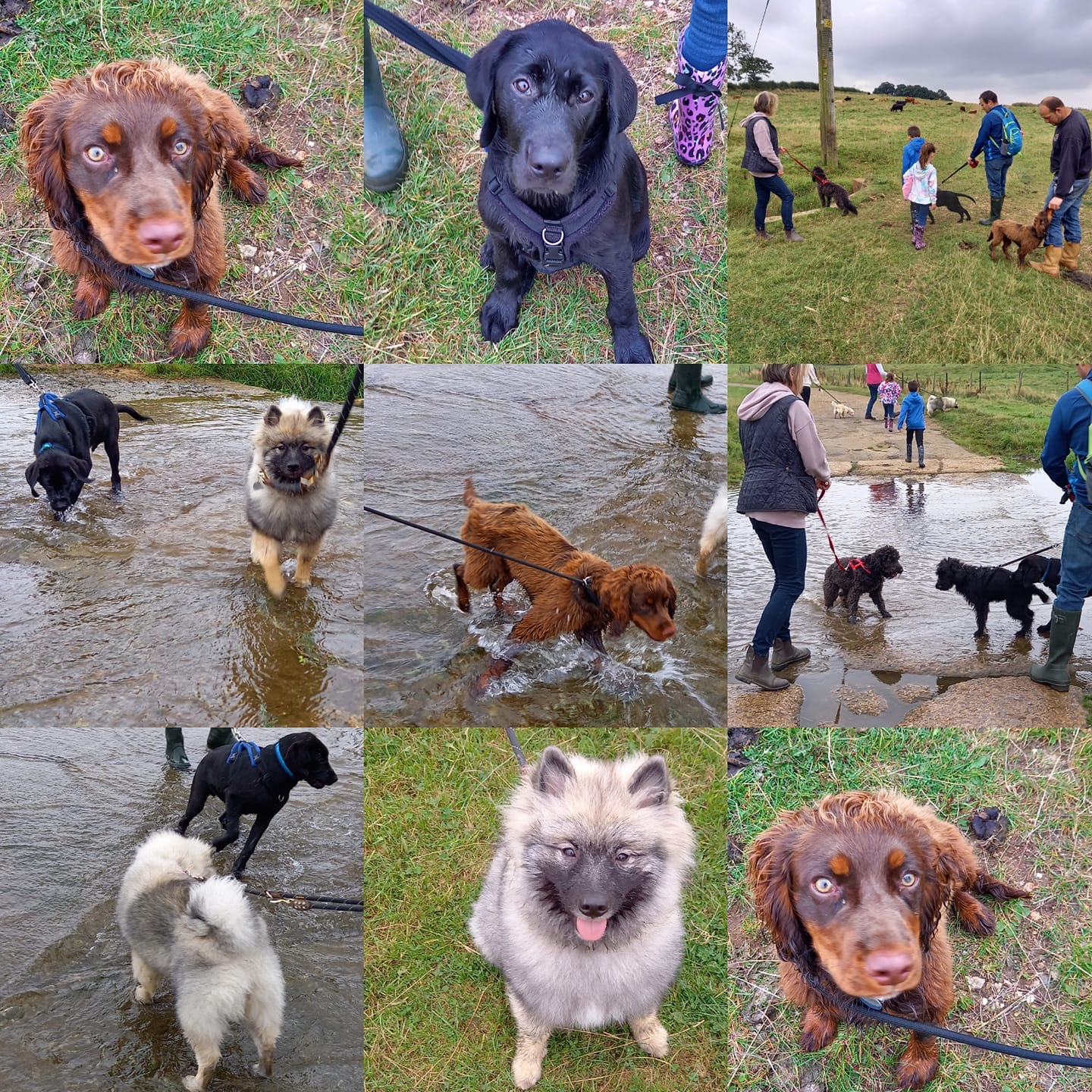
On lead socialisation is as important as off lead. Most pet dogs spend a lot of time on their lead and need to be able to greet people and dogs politely when appropriate or alternatively ignore people and dogs when it is not appropriate to say hello. Letting them run around off lead with no control only teaches them that its a fun thing to do and when the fun police (you) come to put them back on the lead that’s a bad thing and should be avoided (Cue runaway puppy!). There are some great socialisation walks available in most areas, led by qualified and experienced trainers who can help you with on lead manners and the best way to socialise your pup at the same time as exposing them to new environments.
Remember socialisation does not have to be up close. Humans don’t socialise by pawing each others faces and wrestling with each other (usually!). We are happy to be in other people’s company while respecting personal space. Shouldn’t we allow our dogs the same thing?
Leave a Reply